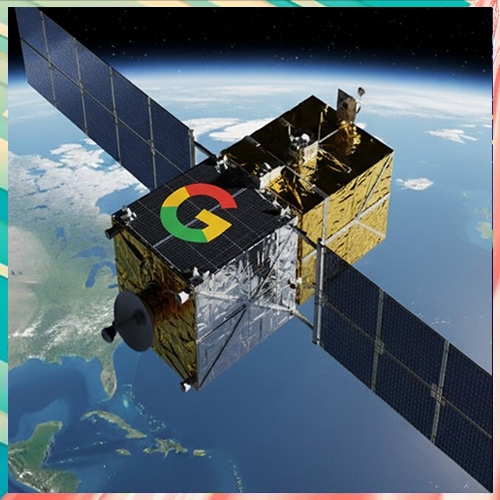
On 4 November 2025, Google Research revealed an ambitious new initiative named Project Suncatcher, aimed at bringing large-scale artificial-intelligence infrastructure into orbit. The project envisions a constellation of solar-powered satellites carrying Google-designed TPUs (tensor processing units) connected via free-space optical links, with the ultimate goal of creating a space-based computing platform capable of tackling the largest-scale machine-learning workloads.
Google Research
The concept, as outlined in the blog post, builds on the fact that solar panels in certain orbits can generate up to eight times the energy they would on Earth, with near-continuous exposure to sunlight reducing reliance on batteries.
By coupling that power advantage with compact satellite architectures and inter-satellite links, Google researchers believe the idea of a “data-center-in-space” is not just speculative—but technologically feasible.
In the system design described, satellites would operate in sun-synchronous low-Earth orbit (LEO), enabling near-constant solar collection. To support ML workloads comparable to terrestrial data centers, the satellites must maintain extremely high-bandwidth links—on the order of tens of terabits per second. To achieve this, Google’s engineers have conducted bench-scale demonstrations showing 800 Gbps one-way transmission using a single transceiver pair.
Another major challenge tackled in the research is locomotive control and cluster formation in orbit. The team employed physics models and a JAX-based differentiable simulation to analyse tightly-clustered satellites flying just hundreds of metres apart while compensating for Earth’s gravity perturbations, atmospheric drag and other non-Keplerian orbital effects.